The Accra Principles on the Protection of Black Women and Girls
Declared in Accra on 28 May 2025, during the Ghana Liberation Tour, and signed at the grounds of the British High Commission. Seven Principles name the areas of life where Black women and girls must be protected. An eighth, Environment, will be declared in Accra at the end of May 2027.
We, a Global Alliance to Protect Black Women and Girls, representatives of whom will gather in Accra, Ghana, on 28 May 2025,
Recognising that protecting Black women and girls (collectively Black Women) requires a whole-of-society approach and that all peoples, regardless of their gender or ethnicity, share a joint and collective responsibility to combat racism and misogyny.
Affirming that all Black Women have the right to live in dignity and free from violence, exploitation, and discrimination, we, therefore, agree to the 7 Accra Principles to Protect Black Women.
The seven Principles
Each one names an area of life where the inequities Black women and girls face must be addressed.
7declared, with an eighth to come in 2027
01
Protection in Health
Ensuring Black Women have equitable access to healthcare, addressing medical inequities, and eliminating discrimination in maternal care, mental health services and medical research.
The inequities suffered by Black Women, for example in childbirth, through medical gaslighting, via data gaps in medical research and clinical trials, and through gender and racial algorithmic biases in a health context, in psychological care, and in therapy and counselling, must be addressed.
02
Protection at Home
Combating gender-based violence and sexual exploitation, and ensuring equal distribution of labour within the home.
The inequities suffered by Black Women, for example with respect to gender-based violence (GBV), sexual abuse, exploitation, and unequal distribution of labour and access to property, must be addressed.
03
Protection in Employment
Addressing unequal pay, workplace discrimination, and exclusionary labour practices that disproportionately affect Black women.
The inequities suffered by Black Women, for example in relation to unequal pay, misogynoir in the workplace, unfair dismissal, being looked over for promotion, microaggressions, exclusionary practices, labour practices in general, unpaid overtime and disproportionate burdens, must be addressed.
04
Protection in Education
Promoting diversity in the curriculum, addressing racial bullying, and ensuring equal opportunities for Black Women in educational settings.
The inequities suffered by Black Women, for example as a result of a lack of representation in the curriculum, exclusions, racial bullying, lack of access to tailored resources for neurodivergent individuals, and lack of representation in staff and management, must be addressed.
05
Protection Economically
Ensuring financial independence and equitable access to credit, and protecting Black Women from discriminatory economic practices and discriminatory access to economic resources and opportunities.
The inequities suffered by Black Women, for example in relation to financial control, lack of control over assets, restricted access to credit, discriminatory funding and banking practices, and inheritance malpractice or discrimination, must be addressed.
06
Protection under the Law
Addressing biases in the criminal justice system, and ensuring that Black women's legal rights are promoted, protected and ensured.
The inequities suffered by Black Women, for example as regards criminal justice discrimination, human rights abuse in detention, discrimination in civil litigation, unfair prosecutions, and the ability to file civil claims against perpetrators of misogynoir, must be addressed.
07
Protection Online
Combating online abuse and misogynistic and racist content, and ensuring Black Women have access to, and are protected in, digital spaces.
The inequities suffered by Black Women, for example with respect to racist and misogynistic abuse online, gender and racial algorithmic bias online, bias in media, reinforcement of harmful stereotypes, and online harassment, must be addressed.
08
Environment
Our eighth Principle, to be declared in Accra at the end of May 2027, during Return to Accra 2027.
Lorem ipsum dolor sit amet, consectetur adipiscing elit. Vestibulum id ligula porta felis euismod semper, nullam quis risus eget urna mollis ornare vel eu leo.
We are resolutely committed to working collectively to eradicate all inequities and effectively address factors leading to the inequities Black Women suffer for the betterment of humanity.
International Day for the Protection of Black Women and Girls
28 May, every year
On 28 May 2025 we declared the day the International Day for the Protection of Black Women and Girls, in honour of our founders' late mother, Justice Irismay, on what would have been her 80th birthday.
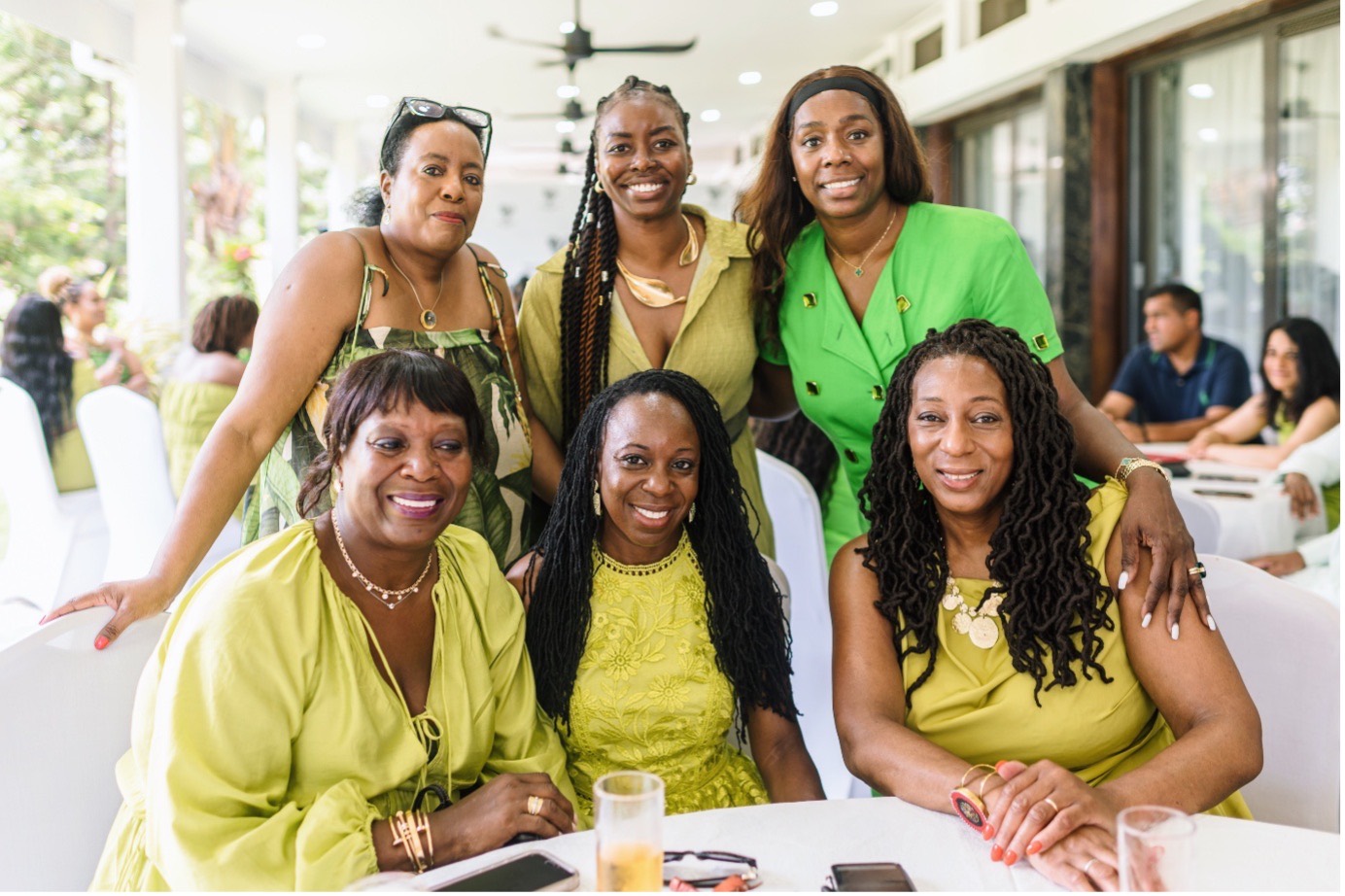
Declaration Day saw the group dressed in lime green, with a recital and the official declaration of the Accra Principles at the grounds of the British High Commission. The Principles were signed in the presence of MPs, calling for all Black women and girls to be protected and treated equitably.